Surgical Tooth Extraction Services at DEV DONTICS
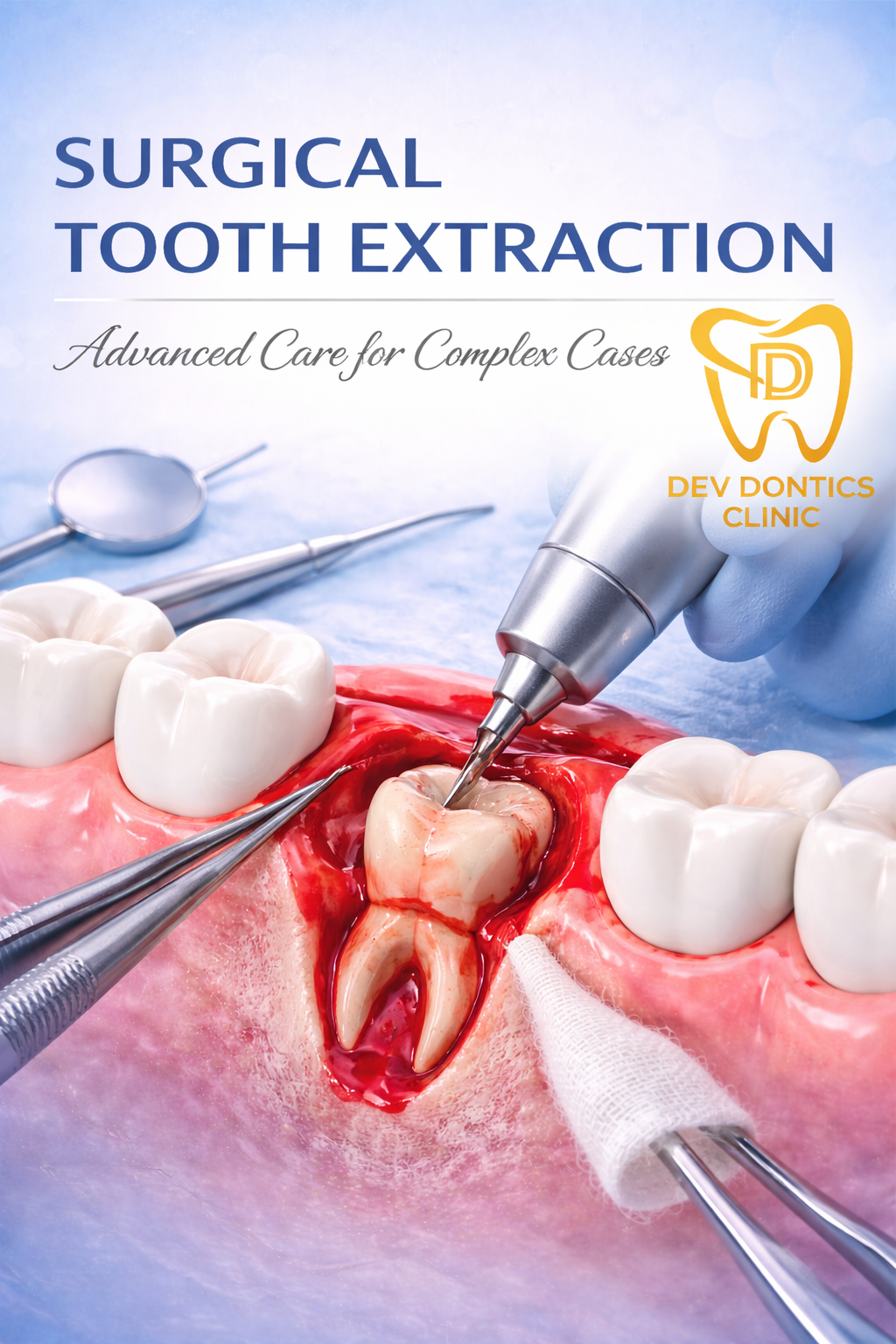
Surgical Tooth Extraction – Advanced Care for Complex Cases
Surgical tooth extraction is a specialized dental procedure used to remove teeth that cannot be extracted through simple methods. This includes impacted, broken, or partially erupted teeth. At our clinic, we perform surgical extractions with precision, advanced techniques, and a focus on patient comfort and safety.
What is Surgical Tooth Extraction?
Surgical extraction involves a minor surgical procedure where the dentist or oral surgeon makes a small incision in the gum to access and remove the tooth. In some cases, the tooth may be divided into sections to allow for easier and safer removal.
When is Surgical Extraction Needed?
- Impacted teeth (especially wisdom teeth)
- Broken or severely damaged teeth
- Teeth that have not fully erupted
- Curved or complex root structures
- Teeth difficult to access or remove with simple extraction
Benefits of Surgical Extraction
- Effective Removal: Safely removes difficult or impacted teeth
- Pain Relief: Eliminates infection and discomfort
- Prevents Complications: Avoids damage to surrounding teeth and tissues
- Improves Oral Health: Reduces risk of further dental issues
The Procedure
- Examination & Imaging: X-rays or scans are taken to evaluate the tooth and surrounding structures
- Anesthesia: Local anesthesia is administered to ensure a painless experience (sedation may be used if needed)
- Incision & Access: A small cut is made in the gum to expose the tooth
- Tooth Removal: The tooth is gently removed, sometimes in sections
- Stitching & Healing: The area may be sutured, and post-care instructions are provided
Is Surgical Extraction Painful?
No, the procedure is performed under anesthesia, so you will not feel pain during the treatment. Some mild swelling or discomfort after the procedure is normal and manageable with medication.
Aftercare Tips
- Bite on gauze to control bleeding
- Apply ice packs to reduce swelling
- Eat soft foods for a few days
- Avoid smoking, alcohol, and strenuous activity
- Do not disturb the extraction site
- Follow medication and care instructions carefully
Expert Care for Complex Dental Needs
Surgical tooth extraction is a safe and routine procedure when performed by experienced professionals. At our clinic, we ensure a comfortable, stress-free experience with a focus on quick healing and optimal results.
Book your consultation today for expert and gentle surgical dental care.